
Creating a Link Rotator
What is a link rotator?
A link rotator, sometimes called a URL rotator, is a link that automatically redirects a user to different destinations based on random chance.

You might use a link rotator to:
- A/B test different landing pages
- Test different offers or affiliates
- Distribute users across multiple WhatsApp groups (see our WhatsApp Rotator guide)
Creating a link rotator
Click Create New Link from the menu.
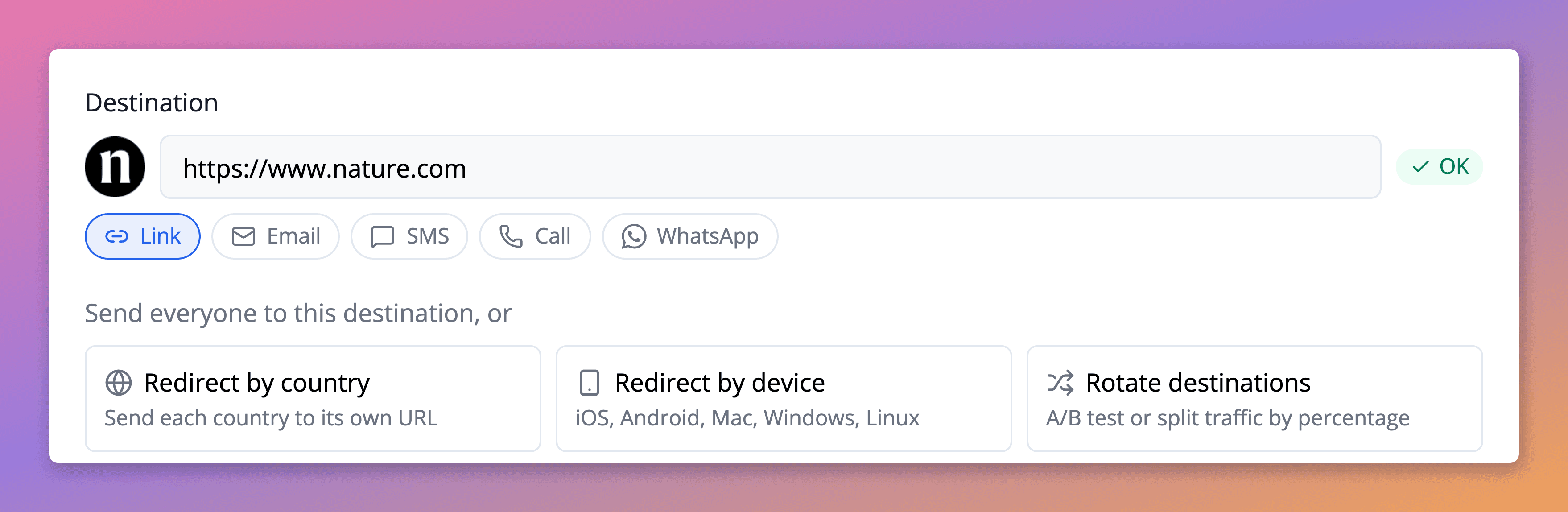
Enter a Destination for the link.
This is one of the destinations you want to test.
Under the destination, click Rotate destinations.
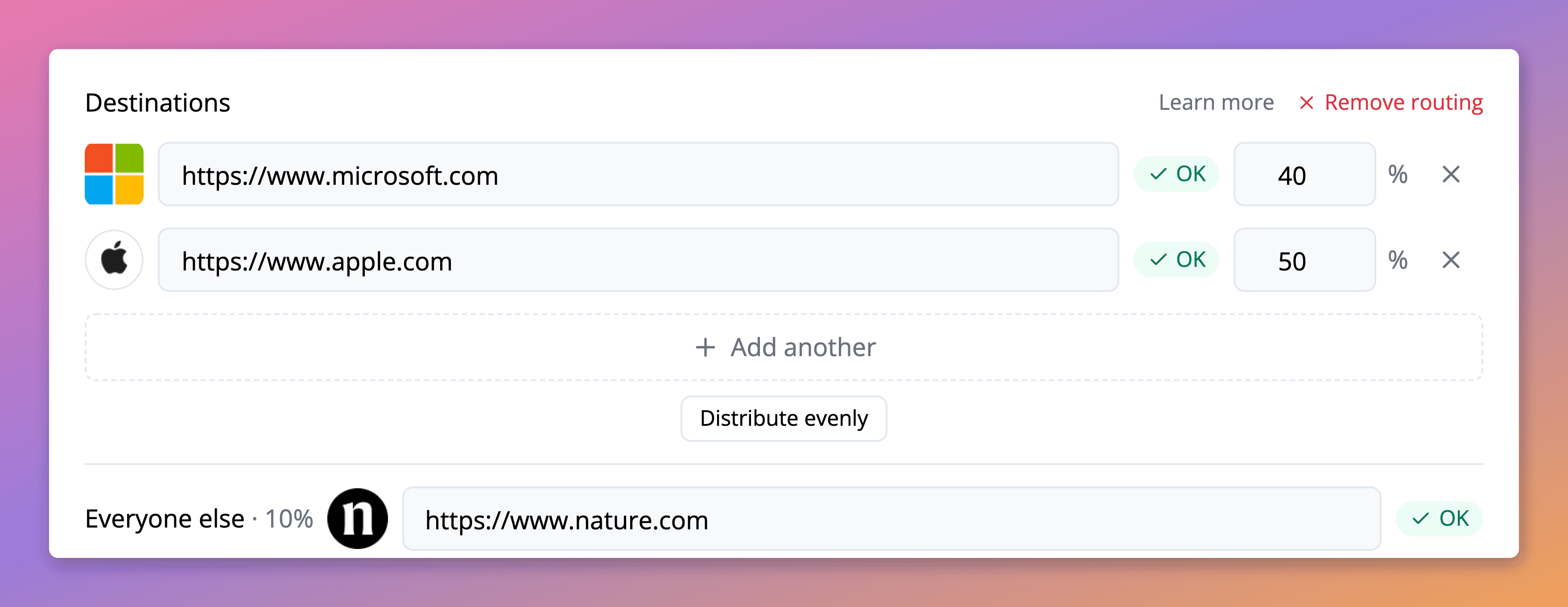
Enter the second destination here.
You can assign a percentage of traffic to redirect to this destination.
Percentages must add up to 100% or less.
Optionally, switch on Remember each visitor's destination.
Anyone who clicks the link again within 30 days goes to the same destination as last time. Leave it off and every click is drawn afresh.
Optionally rename the Nickname (Linkly fills it in from the page's title) so you can find the link later.
Only you see the nickname — it isn't shown to people who click the link.
Click Save.
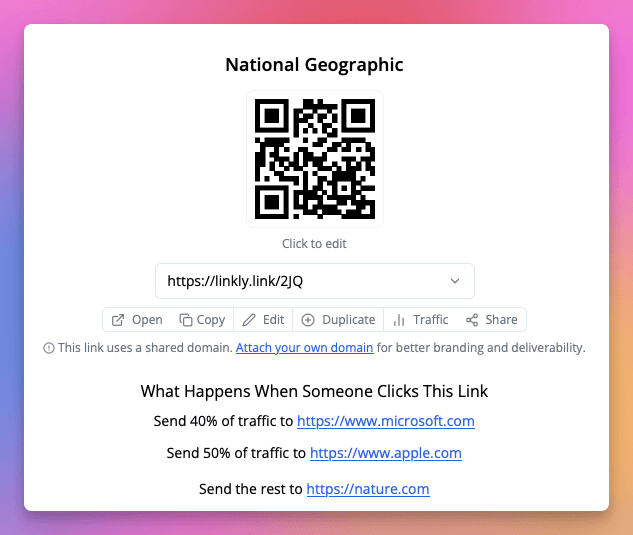
You can now test the effect of the link rotator by opening the link multiple times.
Facts about link rotators
- By default, if a user clicks a link again, they may go to a different destination. Switch on Remember each visitor's destination to send them to the same one every time.
- You can add as many destinations as you like to the link rotator.
- Percentages in the rotator settings do not need to sum to 100%. Any residual traffic will go to the main destination at the top.
- You can see which destinations were redirected to using the Destination tab in the traffic reports.
Sticky link rotators
Sticky link rotators record which destination URL an individual has been rotated to, and then send them to the same destination whenever they click again.
Link rotators are not sticky by default. To make one sticky, edit the link and switch on Remember each visitor's destination, which appears under the rotator's destinations.
Here's how it works:
- The first time someone clicks, Linkly draws a destination as usual and saves a small cookie called
lk_rotin their browser, on your short link's own domain. The cookie only applies to that one link. - When they click again, the cookie tells Linkly which destination they were sent to, and they go to the same one. Each click renews the cookie, so it lasts 30 days from the last click.
- If you change the rotator, returning visitors follow it. A destination you remove, or set to 0%, stops receiving returning visitors, and they are drawn a new destination, which is remembered in turn.
- Stickiness follows the browser, not the person. Someone on a new device, in a private window, or who has cleared their cookies is drawn afresh.
- Every click is still counted, so repeat visits to the same destination show up in the Destination tab of the traffic reports.
- Sticky rotators aren't available on links with privacy mode switched on, because privacy mode doesn't recognise returning visitors. Turning privacy mode on switches stickiness off.
You can also turn it on through the API with the sticky_rotator field.
How link rotator destination URLs are decided
Linkly’s algorithm for URL rotation is probabilistic.
On a sticky rotator, the draw happens the first time a browser clicks and is then remembered. The rest of this section describes the draw itself.
This means that every time a user clicks on a Linkly rotator link, a destination URL is drawn from a hat, based on the probabilities set in the URL rotator’s settings.
This means that a user can potentially see the same destination twice on two consecutive clicks.
This also means that small traffic figures may be unevenly distributed, just as any individual coin flip won't necessarily match the expected probability, but will balance out over a large number of tosses.
When sending enough traffic (200+ clicks) through a rotator, the distribution of destinations will be approximately as defined in the rotator’s settings.
You can see the exact number of redirects to each destination in the traffic reports.
Link rotator FAQs
What happens if a user clicks a link rotator twice?
By default, they may go to a different destination. Users are redirected by random chance, not by clockwork. To send returning visitors to the same destination, switch on Remember each visitor's destination in the link's settings.
Can a link rotator remember which destination someone saw?
Yes. Switch on Remember each visitor's destination and Linkly saves a cookie in the visitor's browser for 30 days, so they go to the same destination whenever they click again. It follows the browser rather than the person, so a new device or cleared cookies get a fresh draw, and it isn't available on links with privacy mode on.
How many destinations can I add to a link rotator?
You can add up to 100 destinations per rotator. The smallest percentage you can use is 1%. To exceed 100 destinations, you can stack rotators by feeding them into each other—one level of stacking allows up to 10,000 destinations.
What happens if the percentage traffic splits don't add up?
Percentages in the link rotator section do not need to sum to 100%. Any residual traffic will go to the main destination at the top.
Plan availability
Available on Pro and above
Get 100 short links and track 500 monthly clicks for free.