

Rebrandly Review 2026
Complete analysis of features, pricing, and alternatives
Last updated May 2026
Rebrandly Overview
Rebrandly Screenshots
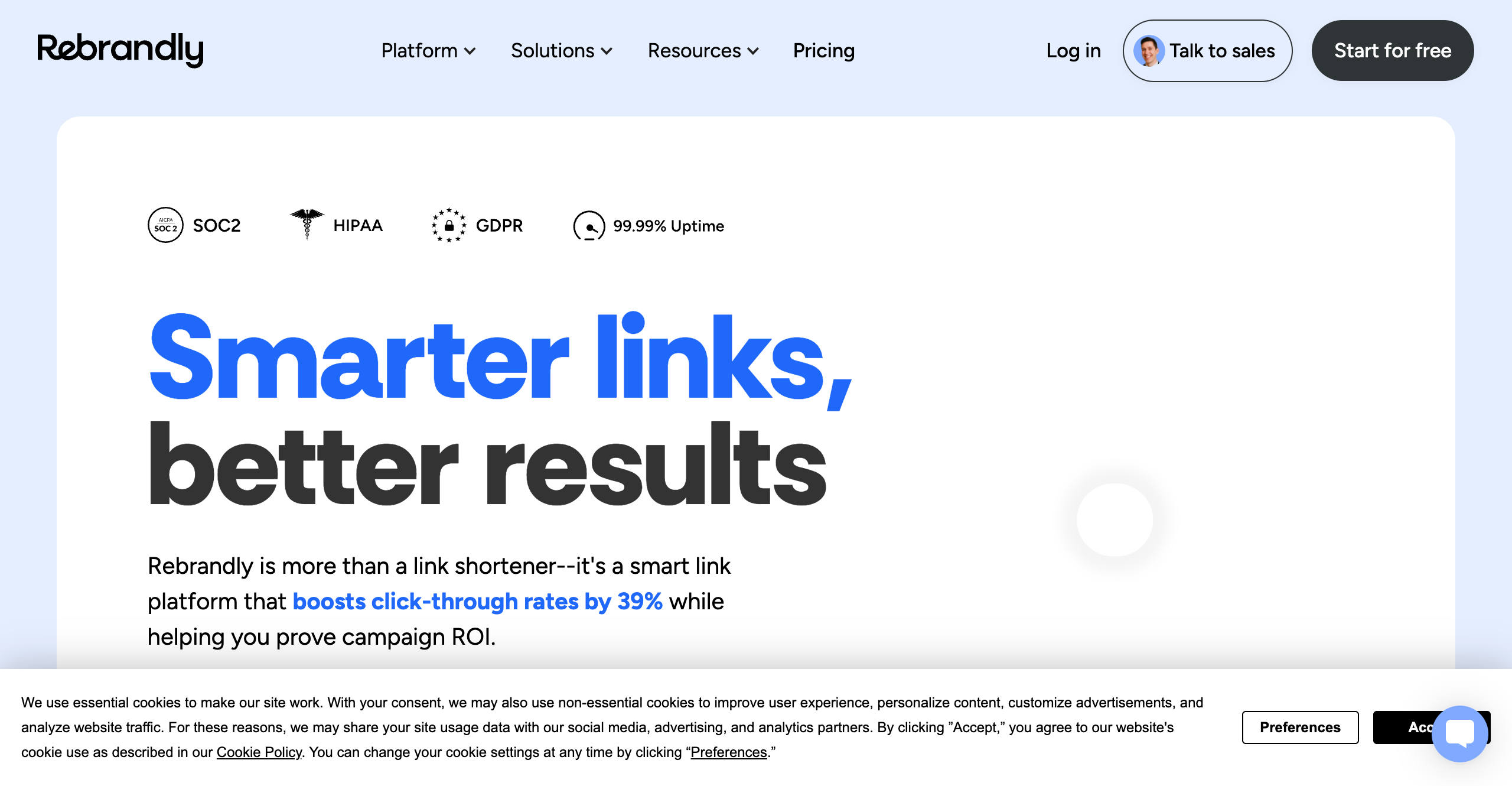
Homepage
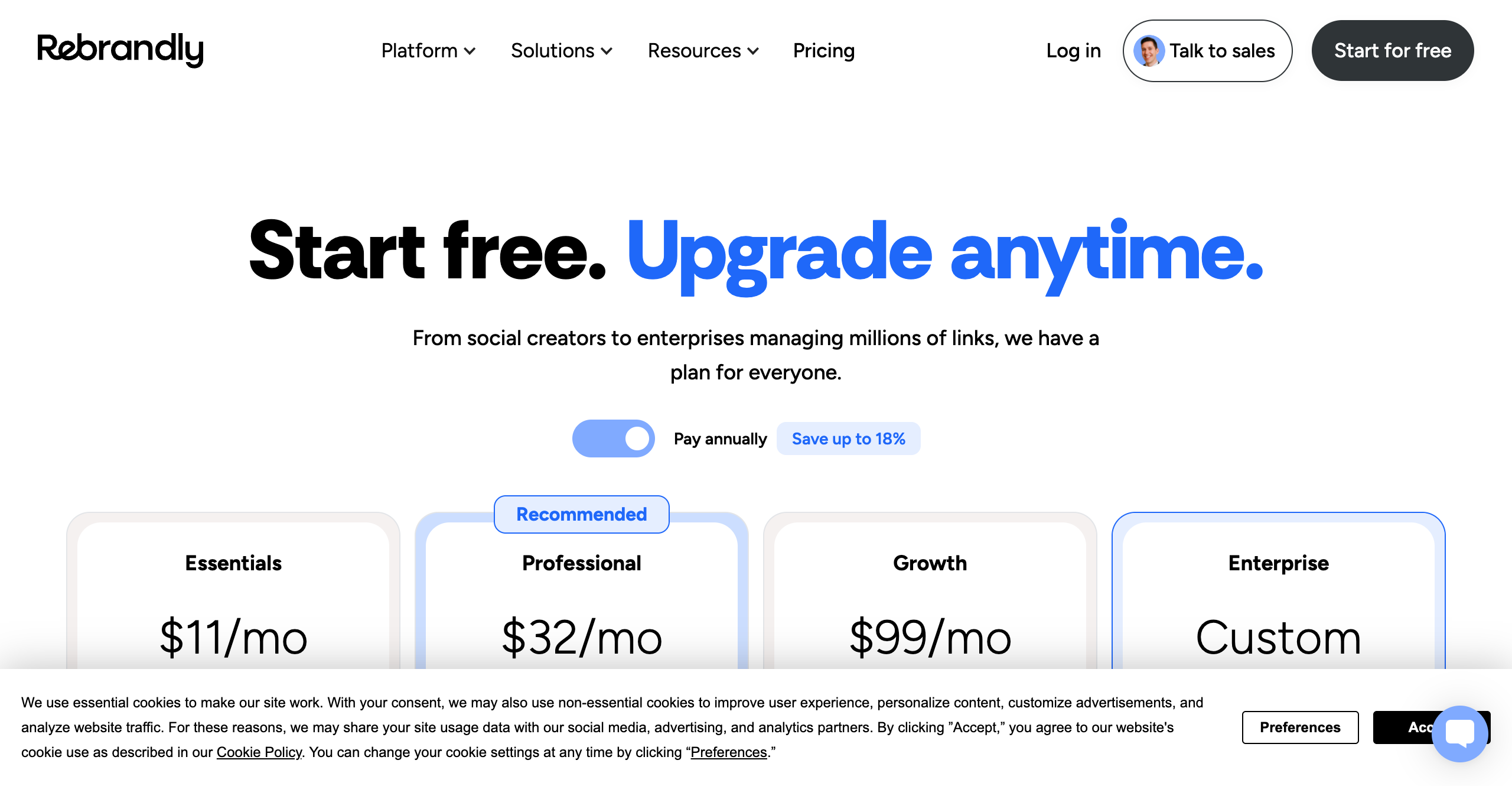
Pricing Page
Rebrandly Key Differentiator
European leader in branded links
Rebrandly Pricing
Rebrandly Features
- 500+ domain extensions
- Advanced analytics
- UTM builder
- Retargeting
- Team collaboration
- Mobile apps
Rebrandly Target Users
- Marketers
- Agencies
- Enterprises
Rebrandly Integrations
- Zapier
- Google Analytics
- Social platforms
- Marketing tools
Rebrandly API
Rebrandly Security
Rebrandly Compliance
Rebrandly Performance
Rebrandly Revenue
Estimated Revenue: ~$9–15M ARR
Rebrandly is a Dublin-based branded link management platform that has carved out a distinctive niche since its founding in 2015. While many URL shorteners compete on analytics or integrations, Rebrandly has built its reputation around two pillars: an unmatched selection of over 500 domain extensions and European data hosting that appeals to privacy-conscious organizations.
The platform serves a broad range of users, from solo marketers looking for branded short links to enterprise teams managing complex multi-domain campaigns. But how does Rebrandly stack up in practice? In this review, we break down the pricing, features, strengths, and limitations to help you decide whether it belongs in your marketing stack.
Rebrandly Pricing
Rebrandly offers five tiers, each with both link and click limits. Here is what you can expect at each level.
The Free plan gives you 10 branded links per month, 100 tracked clicks per month, and 1 custom domain. This is enough to test the platform, but not much more. With only 100 clicks, you will hit the ceiling quickly if you share links on social media or in email campaigns.
The Essentials plan costs $13 per month, or $8 per month if billed annually. It increases your allowance to 250 branded links and 10,000 tracked clicks per month, with support for 1 custom domain. This is the entry point for most small businesses. However, 10,000 clicks is still a relatively low ceiling for active marketers.
The Professional plan runs $32 per month, or $22 per month on an annual contract. You get 1,500 branded links, 25,000 tracked clicks, and 5 custom domains. This plan unlocks more advanced features like link retargeting and deeper analytics, making it the sweet spot for growing teams.
The Growth plan is priced at $99 per month, or $69 per month annually. It provides 3,500 branded links, 150,000 tracked clicks, and up to 10 custom domains. Growth adds team collaboration tools and is designed for agencies or marketing departments managing multiple brands.
The Enterprise plan offers custom pricing with unlimited links, a 99.99% uptime SLA, and dedicated support. This tier is aimed at large organizations with high-volume needs and strict compliance requirements.
One thing that stands out across every tier is the click limit. Even on paid plans, your tracked clicks are capped. If you exceed your plan's click allowance, you will need to upgrade or risk losing visibility into your link performance. This is a pricing model that can create unexpected costs as your traffic grows.
Rebrandly Features
Rebrandly's feature set is built around branded link management, and it does that core job well.
The platform supports over 500 domain extensions, which is significantly more than most competitors. Whether you want a .link, .click, .shop, or something more niche, Rebrandly likely supports it. This is a genuine advantage for brands that want their short links to reflect their identity.
Analytics are solid, with data on clicks, geographic distribution, referrers, devices, and browsers. You can track link performance over time and export reports. A built-in UTM builder makes it straightforward to tag links for Google Analytics integration.
Retargeting is available on higher-tier plans. You can add retargeting pixels to your branded links, allowing you to build audiences from people who click your links, even if they never visit your main website. This is a valuable feature for paid media teams.
Team collaboration features let you manage workspaces, assign roles, and share link libraries across your organization. Mobile apps for iOS and Android let you create and manage links on the go.
On the technical side, Rebrandly offers a REST API with OAuth 2.0 authentication and a rate limit of approximately 10 calls per second. The API is well documented and supports most platform features programmatically.
From a security and compliance standpoint, Rebrandly holds SOC2 Type 2 certification and is HIPAA compliant, which matters for healthcare and finance organizations. European data hosting is a significant differentiator for companies that need to keep data within the EU to satisfy GDPR requirements.
The main limitation on the feature side is that many capabilities are gated behind higher-tier plans. Retargeting, advanced analytics, and team features are not available on the lower tiers, so you may find yourself paying more than expected to access the tools you actually need.
Rebrandly Pros and Cons
Pros:
- 500+ domain extensions. Rebrandly supports more TLD options than virtually any competitor, giving you maximum flexibility in branding your short links.
- European data hosting. For organizations subject to GDPR or with European data residency requirements, Rebrandly's EU-based infrastructure is a real advantage.
- SOC2 Type 2 and HIPAA compliance. Enterprise-grade certifications make Rebrandly suitable for regulated industries where security audits are routine.
- Decent integration ecosystem. Connections to Zapier, Google Analytics, social platforms, and marketing tools cover most common workflows.
- Mobile apps. iOS and Android apps let you manage links without being at your desk.
Cons:
- Click limits on every plan. Even the $11/month Essentials plan caps you at 10,000 clicks. The free plan's 100-click limit makes it nearly unusable for real work. This is a frustrating constraint that penalizes success.
- Features locked behind tiers. Retargeting, advanced analytics, and team collaboration are reserved for Professional and above. You cannot simply pick the features you need.
- Expensive at scale. The Growth plan at $99/month gives you 150,000 clicks, which sounds generous until you run a viral campaign or manage multiple high-traffic links. Enterprise pricing is opaque.
- Free plan is extremely limited. At 10 links and 100 clicks per month, the free tier is essentially a demo, not a usable product.
Rebrandly vs Bitly
Rebrandly and Bitly are the two most frequently compared branded link platforms, and each has distinct strengths.
Bitly is the older and more widely recognized brand, founded in 2008. It has a larger ecosystem of integrations and deeper brand recognition that can matter when working with enterprise clients or partners who already use it. Bitly also offers QR codes and link-in-bio pages, which Rebrandly does not emphasize.
Rebrandly counters with its massive domain extension library (500+ versus Bitly's more limited options) and European data hosting. For companies that prioritize GDPR compliance or want a very specific branded domain, Rebrandly has the edge.
Both platforms limit users by both links and clicks, which is worth noting. Bitly's Core plan ($10/month, annual only) gives you 100 links but does not explicitly cap clicks in the same way, though analytics retention is limited to 30 days. Rebrandly's Essentials ($8/month annual) offers 250 links but caps tracked clicks at 10,000.
Rebrandly is generally the more affordable option for basic branded link management, while Bitly offers more polish, a bigger ecosystem, and features like QR codes. Neither platform is inexpensive once you need serious volume or advanced features.
Rebrandly vs Linkly
Linkly takes a fundamentally different approach to pricing and feature access compared to Rebrandly.
The pricing scales based on click volume, not feature access.
Linkly's free plan offers 500 tracked clicks per month, which is five times Rebrandly's 100-click free tier. Paid plans start at $29 per month for 5,000 clicks with unlimited links, and scale up from there. The $79/month plan includes 50,000 clicks, while higher tiers accommodate significantly more volume.
A key distinction is that Linkly does not impose per-link limits. You can create as many links as you need. Rebrandly's $22/month annual Professional plan gives you 1,500 links and 25,000 clicks. With Linkly, you get unlimited links and focus purely on the click volume your campaigns generate.
Linkly also includes smart routing rules that let you redirect users based on their location, device, language, or time of day. Combined with built-in retargeting pixel support for platforms like Meta, Google, TikTok, and LinkedIn, Linkly is designed for marketers who want to extract maximum value from every click.
For teams that find Rebrandly's tiered feature model frustrating, Linkly's all-inclusive approach is a welcome alternative.
The Bottom Line
Rebrandly is a solid choice for European companies that need GDPR-friendly data hosting and want maximum flexibility in choosing branded domain extensions. Its SOC2 Type 2 and HIPAA certifications also make it a contender for organizations in regulated industries.
However, the click limits across all plans, including paid ones, can create friction for growing marketing teams. The feature gating means you may need to upgrade sooner than expected, and the free plan is too restrictive to serve as a meaningful trial.
For marketing teams that want full-featured link management without worrying about per-click caps or feature restrictions, Linkly offers a more straightforward pricing model based on click volume. If your priority is getting the most capability for your budget, it is worth comparing both platforms side by side before committing.
Looking for a Rebrandly Alternative?
Try Linkly - the powerful URL shortener with advanced analytics, custom domains, and reliable tracking.
Try Linkly Free